

Enjoyed this recipe? Add us to your Google Search Preferred Sources:
Za’atar is both an aromatic herb native to the Levant and the name of the much-loved seasoning made with its dried leaves, sumac and sesame seeds. It’s eaten across Palestine, Lebanon, Syria and Jordan, with recipes and traditions varying from one place, village and family to another.
Originally published in 2015 and fully updated in 2026. I’ve since grown Origanum syriacum myself, dried the leaves and made za’atar from scratch, so this version now includes updated cultural context, drying instructions, storage advice and my homegrown za’atar blend.
Estimated reading time: 14 minutes
Table of contents
- What is Za’atar?
- The Herb
- What Does it Taste Like?
- History and Culture
- Za’atar in Palestinian Food Culture
- Don’t Dry All of It
- Growing Za’atar in the UK
- How to Dry Fresh Za’atar
- How to Make Za’atar Spice Mix with Dried Homegrown Za’atar
- Za’atar Spice Mix Ingredients
- How to Use Za’atar Spice Mix
- How to Buy Good Za’atar
- How to Store
- Variations and Substitutions
- FAQs
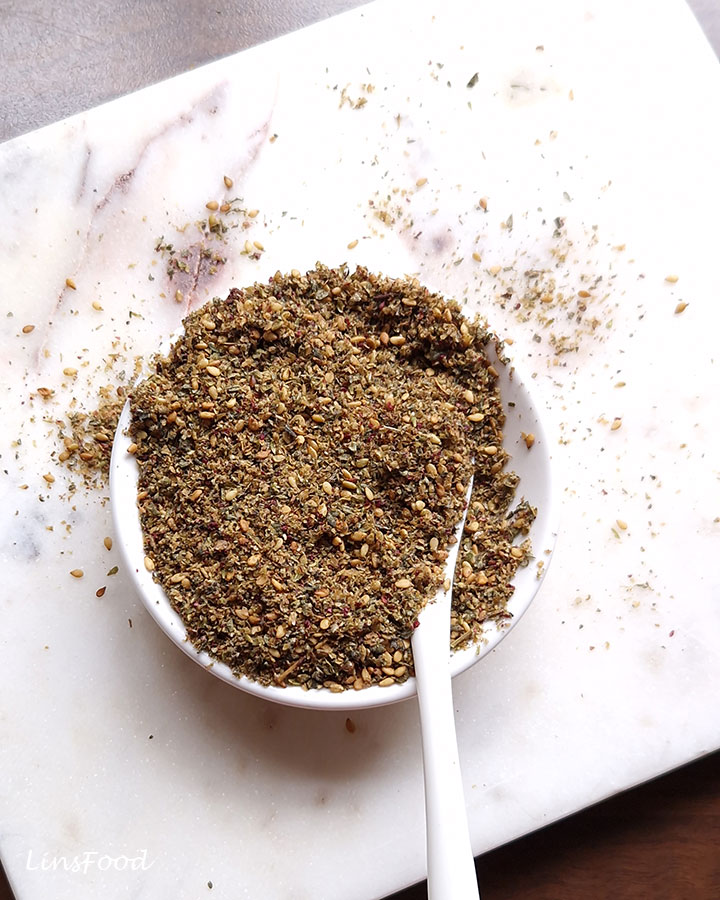
What is Za’atar?
The first thing to understand about za’atar (زعتر) is that the word has more than one meaning.
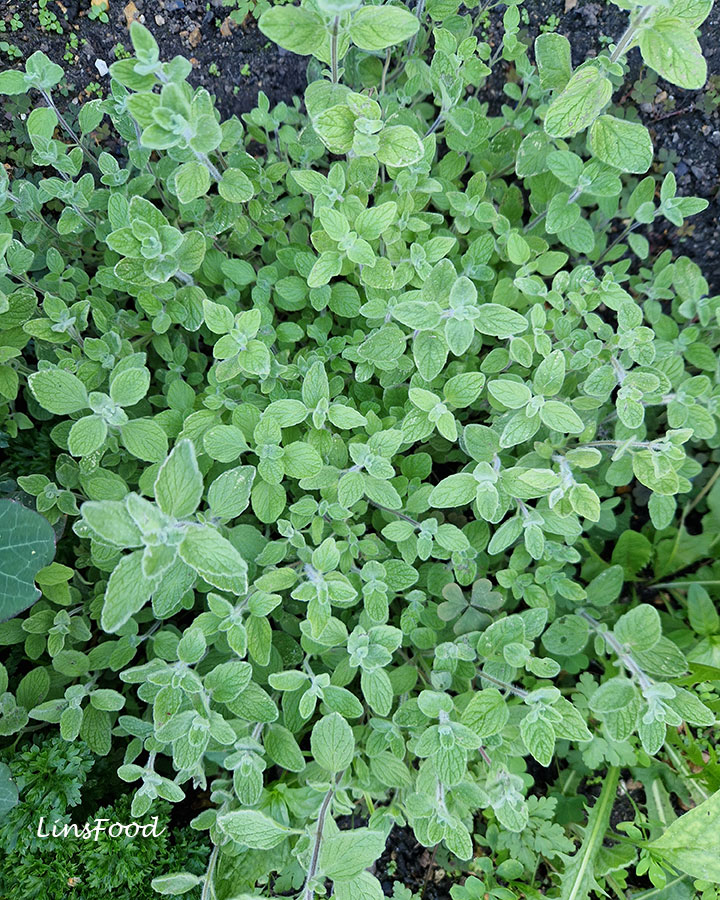
Za’atar is a herb
Za’atar can refer to a group of aromatic plants from the mint family traditionally used across the Levant. The plant most closely associated with the culinary za’atar discussed here is Origanum syriacum.
You may see it described in English as Syrian oregano, Lebanese oregano or Bible hyssop.
It grows naturally across the eastern Mediterranean, including Palestine, Lebanon, Syria and Jordan, so I wouldn’t describe za’atar itself as Palestinian in origin. It belongs to the wider Levantine landscape and food culture.
Za’atar is also the spice mix
The same word is used for the seasoning traditionally made from dried za’atar leaves combined with other ingredients, most importantly:
- sumac
- toasted sesame seeds
- salt
The precise mixture changes considerably from place to place.
So if you’ve ever wondered:
Is za’atar a herb or a spice mix? The answer is both.
Context usually tells you which one somebody means.
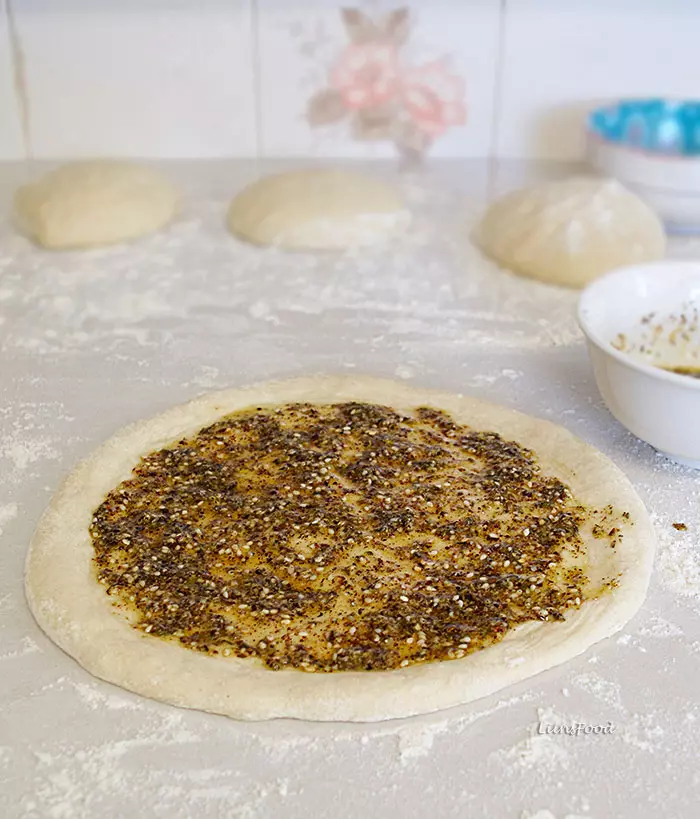
If you’re looking for the classic bread topped with za’atar and olive oil, head over to my man’oushe (za’atar flatbread) recipe. We’re concentrating on the herb itself here.
The Herb
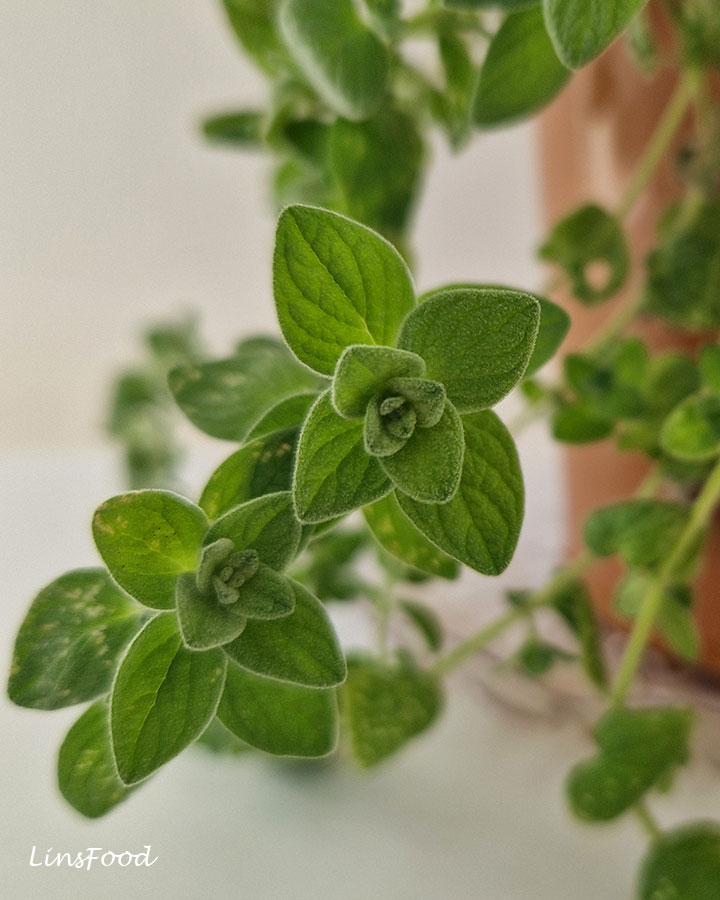
Origanum syriacum is a perennial that can grow into a fairly substantial upright bush, with grey-green aromatic leaves and small white to pale pink flowers. Its flavour isn’t completely fixed either: climate, soil and season all affect the aromatic oils in the plant, and the flavour tends to intensify through summer.
That’s particularly interesting if you’re growing it yourself, because the za’atar you harvest in June may not taste quite the same as the plant you cut later in the season!
Fresh za’atar has small, intensely aromatic leaves. Rub one between your fingers and the family resemblance to oregano and thyme is immediately obvious, but it doesn’t smell quite like either.
And that’s important.
You will often see recipes telling you to make this Levantine spice mix with ordinary dried thyme or oregano. They’re useful substitutes if that’s all you can get.
But if you have actual Origanum syriacum, use it.
There isn’t much point in growing the real thing only to replace it with thyme at the crucial moment.
What Does it Taste Like?
Fresh za’atar is strongly aromatic, herbal and slightly peppery, with some of the warm, resinous notes you’d associate with oregano.
The spice blend is more complex because three very different flavours are working together:
- the herb brings the green, aromatic flavour
- sumac brings tartness and fruitiness
- toasted sesame brings warmth and nuttiness
Salt sharpens the whole thing.
A good za’atar mixture should smell distinctly herbal when you open the jar.
If the first thing it reminds you of is the cupboard, it has probably been there too long.
History and Culture
Trying to give za’atar one neat national origin doesn’t really work.
The herb grows through the eastern Mediterranean and its culinary use crosses modern borders. Fresh and dried za’atar feature in the food traditions of Palestine, Lebanon, Syria and Jordan, and there are many regional plants and mixtures that carry the za’atar name.
That’s also why there is no single definitive recipe.
One household may favour sesame. Another wants far more sumac. Another may add additional spices.
Za’atar in Palestinian Food Culture
Although za’atar is Levantine rather than exclusively Palestinian, it has a particularly strong place in Palestinian food culture.
An ethnobotanical study conducted across communities in the northern West Bank identified za’atar among the wild edible plants most deeply rooted in Palestinian traditional food culture. Its leaves were recorded being eaten fresh, dried and ground, and combined with olive oil, sesame and other seasonings.
Bread, olive oil and za’atar have long formed one of the simplest and most familiar Palestinian meals, and the combination remains closely associated with the Palestinian table.
Za’atar is also economically important. Research into Origanum syriacum cultivation describes it as an important Palestinian agricultural crop and notes the nickname “Palestine’s green gold.” It’s a useful phrase because it captures something a jar in the spice aisle doesn’t: za’atar is not only food and cultural memory, but also something farmers grow, harvest and sell for a living.
Za’atar Before School
There’s a longstanding folk belief across parts of the Levant that za’atar helps sharpen the mind, which explains the familiar stories of children being encouraged to eat za’atar before school or exams.
I’d keep this firmly in the category of food tradition rather than medical claim.
Za’atar has certainly attracted scientific interest because of the compounds found in Origanum syriacum, but that is a very different thing from claiming that a za’atar sandwich will get anyone through double maths.
The Land and Wild Harvesting
Wild za’atar also has a complicated modern history.
In 1977, Israel designated wild za’atar as a protected plant, citing conservation and concerns about overharvesting. Palestinian legal and cultural organisations have since challenged the scientific basis and enforcement of those restrictions, arguing that they disproportionately affected long-established Palestinian foraging practices.
Cultivated za’atar therefore matters for more than convenience: it also provides a reliable way to preserve the herb and its food traditions without depending on wild harvesting.
Don’t Dry All of It
One thing easily missed when we talk endlessly about jars of za’atar is that the fresh plant is eaten too.
Traditional Palestinian ethnobotanical research records za’atar among herbs eaten fresh in salads with olive oil and lemon, alongside foods such as olives, onion and bread.
Fresh za’atar salads are found elsewhere across the Levant too, but it does vary regionally, as you’d expect.
One version combines fresh za’atar leaves with finely chopped onion, garlic, lemon juice, olive oil and sumac. Similar mixtures can also be used to fill savoury pastries, sometimes with white sheep’s cheese.
So before drying your entire plant, pinch off some fresh leaves and try them.
Simple Fresh Za’atar Salad
Try:
- fresh za’atar leaves
- finely sliced onion or spring onion
- sumac
- lemon juice
- extra virgin olive oil
- salt
You can add tomato if you like. Eat it with bread, olives and cheese.
Fresh za’atar is also used in pastries and fatayer, particularly when the plant is in season.
Growing Za’atar in the UK
I’ve grown mine successfully here in the UK, which is one reason this update has become much more interesting than simply opening a packet of dried herbs.
Origanum syriacum likes:
- full sun
- very free-draining soil
- relatively lean soil rather than rich, damp compost
The RHS rates it H4, hardy through much of the UK to roughly -10°C to -5°C. The bigger warning is winter wet: the RHS specifically recommends protecting it from wet winter conditions or overwintering it under cover.
My surviving plant will be spending winter in my conservatory. It stays cool in winter, usually around 10–15°C at most, but protects the plant from prolonged rain and hard frost.
If you’re keeping yours outdoors, drainage becomes particularly important.
How to Dry Fresh Za’atar
Traditionally, za’atar is dried naturally. The plant material can be spread out in a shaded, well-ventilated place until completely dry before the leaves are rubbed or pounded away from the stems and sieved.
Guidance for commercial za’atar production similarly recommends shade, good air circulation and protection from moisture and contamination.
Research into Origanum syriacum also gives us a useful bit of science here: its aromatic essential oils are sensitive to heat. Higher drying temperatures can reduce some of the volatile aromatic compounds, so gentle drying is preferable.
I’ll be using my dehydrator on its lowest setting, 35°C, and drying the za’atar until the leaves are completely crisp and crumble easily between my fingers. Depending on your machine and how much you’re drying, this will usually take a few hours.
You can use an oven, but it’s not my first choice because many domestic ovens don’t go low enough and their temperatures fluctuate more. If that’s your only option, use the lowest setting available, ideally around 40-50°C, spread the za’atar in a single layer, and leave the door slightly ajar if your oven allows it safely. That helps moisture escape and keeps the temperature from climbing too high.
Whichever method you use, cool the herb completely before stripping the leaves from the stems and storing them. The leaves should snap or crumble, not bend. If there’s any softness left, they need more drying.
How Do I Know the Za’atar Is Properly Dry?
Take a leaf between your fingers. It should crumble, not bend.
Before storing a big batch, I also like the jar test: loosely jar a little of the cooled herb for several hours. If you see any condensation or the leaves soften, they’re not dry enough.
Take them back out and continue drying.
How to Make Za’atar Spice Mix with Dried Homegrown Za’atar
Now to the part I’ve been looking forward to.
When you have actual dried Origanum syriacum, I don’t think it makes sense to bury it under equal quantities of sesame and sumac.
Za’atar blends vary widely across the Levant, and there isn’t one fixed ratio that everyone follows. Some are very herb-forward, others contain more sesame or sumac, and some include additional ingredients altogether.
For my own homegrown za’atar, I want the herb to stay firmly in charge.
My Starting Ratio
Use approximately:
4 parts dried za’atar : 1½ parts toasted sesame : 1 part sumac
Then taste it.
Add more sumac if you want extra tang, more sesame if you want it nuttier, or more dried za’atar if you want a greener, more aromatic blend.
That’s the important bit: start with a good ratio, then adjust it to suit your own za’atar and your own taste.
Za’atar Spice Mix Ingredients
- Dried za’atar herb (Origanum syriacum): Origanum syriacum is the aromatic Levantine herb most commonly associated with za’atar, sometimes sold in English as Syrian oregano or Lebanese oregano. If you can get the real dried herb, use it. Thyme, oregano or marjoram can make a good substitute blend, but they don’t taste exactly the same. For this recipe, I’m using the za’atar I’ve grown and dried myself.
- Sumac: This gives the mix its characteristic tart, fruity edge. Use good-quality ground sumac if you can, and check the ingredients before adding salt, as some commercial sumac already contains quite a bit.
- Sesame seeds: Toast them first to bring out their nuttiness and aroma. I prefer to leave most of the seeds whole so there’s still some texture in the finished za’atar.
- Salt: Use it lightly. Za’atar should taste herbal, tangy and nutty rather than principally salty. You can always season whatever you’re serving it with afterwards.
Should I Grind the Sesame?
You can crush a small amount of the toasted sesame with the dried herb if you want a slightly more integrated mixture, but I wouldn’t grind all of it.
Leaving most of the sesame seeds whole gives the za’atar better texture and keeps the different elements distinct.
How to Use Za’atar Spice Mix
Manakeesh
Za’atar mixed with olive oil and spread over bread before baking is probably its most famous use.
Rather than repeating the recipe here, see my man’oushe recipe for the full method.
With Olive Oil and Bread
This is something we have on the table no matter what Middle Eastern meal we’re serving. Put good olive oil in one dish and za’atar in another.
Dip the bread into the oil and then into the za’atar. Easy starter.
With Labneh
A generous spoonful of homemade labneh, olive oil and za’atar is one of the simplest ways to eat it.
Add tomatoes, cucumber and olives and you’re not exactly suffering.
Fried Halloumi with Za’atar and Honey
For something rather less restrained, try my fried halloumi with za’atar and honey.
Salty halloumi, fragrant za’atar and honey work ridiculously well together.
Tomatoes and Cucumbers
Drizzle sliced tomatoes or cucumbers with olive oil and scatter za’atar over them.
Particularly useful when lunch appears to consist of things you’ve found in the fridge.
Eggs
Scatter it over:
- fried eggs
- scrambled eggs
- omelettes
- boiled eggs
I prefer adding it at the end rather than cooking it for ages.
Roast Vegetables
It’s excellent with:
- potatoes
- cauliflower
- carrots
- aubergine
- courgettes
- squash
Add it towards the end of roasting or after cooking to preserve more of the aroma.
Chicken and Fish
Mix za’atar with olive oil and use it on chicken before roasting, or scatter it over cooked fish with lemon.
How to Buy Good Za’atar
Look for a blend where the herb is doing real work. Ideally, the ingredient list should include za’atar herb or Origanum syriacum, sumac, sesame seeds and salt.
Good za’atar should smell strongly herbal and fresh, with visible sesame and a green-brown colour.
If the producer tells you where the herb was grown and who made the blend, even better. ZThis traditional spice mix is produced across the Levant, so you’ll find excellent Palestinian, Lebanese, Syrian and Jordanian versions, each with its own balance of herb, sumac and sesame.
How to Store
Store both dried za’atar leaves and the finished spice blend:
- in an airtight container
- somewhere cool
- somewhere dark
- away from the cooker
- away from moisture
For maximum flavour, I prefer keeping dried leaves relatively whole and crushing them when I make a batch.
Ground aromatic herbs lose their character faster.
The same applies to your finished za’atar: make quantities you will actually use rather than one heroic jar intended to become a family heirloom.
Variations and Substitutions
- Thyme instead of za’atar herb: If you can’t get Origanum syriacum, use a mix of thyme and oregano rather than thyme alone. It works well as a substitute, but it isn’t the same herb.
- If you can’t get sumac: Sumac is a crucial part of the classic za’atar flavour, bringing the tart, fruity edge that balances the herbs and sesame. If you can’t get it, you can still make a pleasant herb-and-sesame seasoning, but it won’t taste quite like traditional za’atar. A little lemon zest added at serving time can provide some brightness, but it isn’t a true substitute.
- Without sesame: Simply leave it out if needed for an allergy. The blend will be more herb-forward. I wouldn’t replace it with another seed just for appearance.
- Caraway and other spices: Some regional and household blends include caraway, cumin, coriander or anise. For my homegrown version, I’m keeping the mix simple so the za’atar itself stays in the lead.
FAQs
Za’atar is both a group of aromatic Levantine herbs and the name of a seasoning made with dried za’atar leaves, sumac, sesame seeds and usually salt. Origanum syriacum is one of the plants most closely associated with culinary za’atar.
Za’atar isn’t exclusively Palestinian. The herb and seasoning are part of food traditions across the Levant, including Palestine, Lebanon, Syria and Jordan. It does, however, have particularly strong cultural and agricultural significance in Palestine.
No. Actual za’atar such as Origanum syriacum is related to oregano and thyme, but it is a distinct plant. Dried thyme is often used as a substitute when true za’atar isn’t available.
The basic blend contains dried za’atar herb, sumac, toasted sesame seeds and usually salt. Exact ingredients and proportions vary significantly between regions and families.
Yes. Fresh za’atar is used in salads and pastries across the Levant. Try the leaves with onion, lemon juice, olive oil, sumac and salt.
Dry fresh za’atar at a low temperature to preserve as much of its aroma as possible. I use a dehydrator set to 35°C and dry the sprigs until the leaves are completely crisp and crumble easily between my fingers. If you don’t have a dehydrator, use your oven on its lowest setting, ideally around 40–50°C, with the door slightly ajar if your oven allows it safely. Cool completely before stripping the leaves from the stems and storing them.
There is no universal ratio. For homegrown Origanum syriacum, I recommend starting with approximately 4 parts dried za’atar leaves, 1½ parts toasted sesame and 1 part sumac, then adjusting to taste.
Properly dried za’atar stored in an airtight container in a cool, dark cupboard will keep for months, although its aroma gradually fades. Make smaller batches for the best flavour.
If you like the recipe, don’t forget to leave me a comment and that all important, 5-star rating! Thank you!
And if you make the recipe, share it on any platform and tag me @azlinbloor, and hashtag it #linsfood
Lin xx
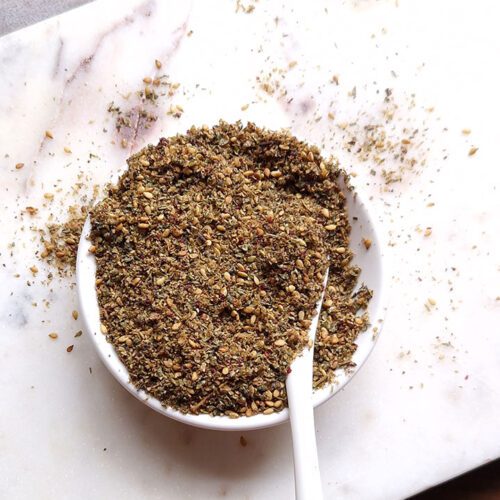
Homemade Za’atar Spice Mix
Ingredients
- 1 small bunch Fresh za’atar, Origanum syriacum sprigs enough to yield 4 Tbsp dried leaves
- 1½ Tbsp sesame seeds
- 1 Tbsp ground sumac
- ¼ tsp fine sea salt or to taste
Instructions
- Dry and prepare the za’atar first. If you already have access to dried Origanum syriacum, move on to Step 3.Spread the fresh za’atar sprigs in a single layer in a dehydrator and dry at 35°C until the leaves are completely crisp and crumble easily between your fingers.
- Strip the dried leaves from the stems.Once completely cool, rub the leaves from the stems and discard the woody stalks.Pass through a medium sieve if needed to remove coarse stem pieces.Measure out 4 Tbsp dried leaves.
- Toast the sesame seeds. Place the sesame seeds in a dry frying pan over medium-low heat and toast until lightly golden and fragrant. Tip them onto a plate immediately and leave to cool.
- Crush the dried za’atar. Rub the leaves between your fingers or palms until fairly fine, removing any remaining woody pieces. Don’t grind them to a powder.
- Mix the za’atar. Combine the dried herb, toasted sesame, sumac and salt in a small bowl.
- Add more sumac for extra tartness, more sesame for nuttiness, or more dried za’atar if you want a greener, more aromatic blend.
- Store. Transfer to a clean, airtight jar and keep in a cool, dark cupboard.
Notes
Nutrition
Enjoyed this recipe? Add us to your Google Search Preferred Sources:


Za’atar really is one of the most fragrant and flavour enhancing of spice blends. I almost make mine like you have but without rose petals and dried fruit peels. I can imagine how much more exotic the addition of these extra ingredients would make the mix. Next time definitely!
It certainly is, thank you, Maria.
Awesome. Making it today! I’ll try it with some yoghurt, but definitely want to make the Lebanese flatbread! Thanks mate!
Anytime.
Hi,I log on to your new stuff named “Za’atar – a Middle Eastern Spice Mix” on a regular basis.Your writing style is awesome, keep doing what you’re doing! And you can look our website about تحميل اغانى.
Thank you, will do.
Oh my, so glad I ran into this post! I love za’atar! I can make it home?? Better yet!
Thank you Shinee, let me know how you make yours!
I love all of the flavors in this and could find many uses for it! thanks for sharing!
A pleasure, thanks for stopping by. x
I have a bottle of za’atar in my cabinet all the time but had not made it myself. You have shown me how easy it is. Will definitely be making my own. Thx for sharing.
Thanks for stopping by Peter.
I love zaatar and usually get mine when I visit my parents in Dubai. A good friend from Palestine makes it for me and it’s just the most aromatic stuff ever. Better than anything I have tried. The specific kind of oregano you need for this recipe is not available here in Germany and making it with regular oregano is good but not what it should be.
Actually, that’s not quite true, as I mention in the post, there is no single recipe, and many families don’t even use oregano.
I always wanted to try out zaatar mix at home. thank you for sharing <3
A pleasure.
I love making my own spice blends and I quite enjoy Za’atar. Enjoyed it in Turkey and have used at home in Australia. It is so simple to make and enjoy making variations.
Variations are always good!