

Enjoyed this recipe? Add us to your Google Search Preferred Sources:
This Persian roast lamb is a juicy, aromatic leg of lamb marinated with pomegranate molasses, saffron, lemon and garlic. It is an easy but impressive roast for Nowruz, Easter, Christmas or any meal where you want something a little bit special.
Estimated reading time: 12 minutes
Table of contents
- Roast Lamb for Any Occasion
- What makes this Persian Roast Lamb so Special?
- How to Make Persian Roast Lamb?
- Ingredients & Ingredient Notes
- How to tell when Persian Roast Lamb is Done
- Make Ahead
- How to serve Persian Roast Lamb?
- How to Store Leftovers
- Troubleshooting Persian Roast Lamb
- Persian Roast Lamb FAQs
- Accompaniments for Persian Roast Lamb
- Images from LinsFoodies

Roast Lamb for Any Occasion
I first created this roast lamb for a Nowruz event I was catering for some Persian clients, which is where the name comes from. So yes, I’m taking a tiny bit of artistic licence with the name “Persian roast lamb”. With ingredients like saffron and pomegranate molasses, and the occasion it was created for, the name felt entirely fitting. Don’t you think?
A roast of any kind always makes a great table centrepiece, whether it’s dressed to impress or straight out of the oven without a care in the world.
Today’s roasted leg of lamb is a favourite with my Middle Eastern customers here in the UK as well as readers in Iran. So that’s saying something, right?
The customers are long standing ones and twice a year, regular as clockwork, I can expect them knocking on my door to discuss the next Persian dinner and menu.
What makes this Persian Roast Lamb so Special?
In one word (erm, 2 really) – Pomegranate Molasses.
Pomegranate Molasses is a heavenly ingredient that adds tangy and slightly sweet flavours to whatever you use it in. To me, it’s a cross between a mild honey and balsamic vinegar; that’s the closest comparison I can give you!
However, go on ahead to the page on Pomegranate Molasses to read more about it. I also give you a diy pomegranate molasses recipe.
It is easily available here in the UK from our large supermarkets like Waitrose, Sainsburys and Ocado. Or try your hand online, if you can’t find it wherever you are. Here is my affiliate link for getting it on Amazon.
The pomegranate gives a beautiful and delicious glaze to our roast. It adds depth with all its touches of tart, sweet, caramel coming into play. These flavours are heightened by the other ingredients that we have, like saffron, lemon, turmeric, pepper, cumin and some honey. Sounding good to you?

How to Make Persian Roast Lamb?
As mentioned, our Persian Roast Lamb is very easy to cook. This is what we’ll be doing:
- Make the marinade.
- Make cuts/slits in the lamb leg with a small, sharp knife.
- Rub the marinade all over and in the cuts (marinate for as long as you can).
- Roast the lamb for 1 1/2 hrs.
We cut some slashes into the meat to allow the marinade to penetrate through and get soaked up by the meat fibres for a better all round flavour.
Ingredients & Ingredient Notes
Which cut of Lamb is Best?
For this Persian roast lamb, a leg of lamb is the best choice if you want neat slices and a proper roast centrepiece. It’s leaner, looks more elegant on the table, and is ideal when you want that classic carved roast.
Lamb shoulder also works very well. However, it is a little richer and more forgiving because of its extra fat and connective tissue, so it suits longer roasting and a softer, more fall-apart finish. If you want tidy slices, go for leg. If you want maximum forgiveness and deeper richness, shoulder is a very good shout.
Liquid Saffron (or Bloomed Saffron)
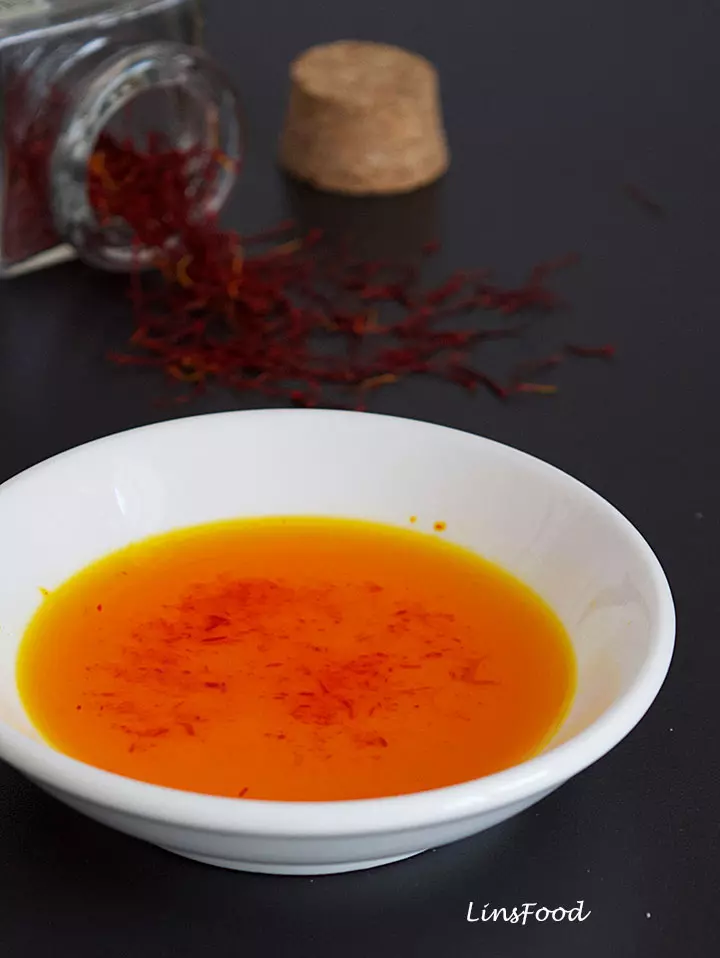
Liquid Saffron is an indispensable kitchen ingredient in the Persian kitchen, but perfect for all cuisines – this is liquid gold!
When you only soak the saffron in water, you are not utilising everything that this potent ingredient has to offer. You get the aroma, the flavour and the colour but the very substance of the saffron, to me, remains elusive when you leave it whole.
To get liquid saffron, we crush the saffron in a pestle and mortar first, with just a tiny pinch of salt or sugar to aid the grinding. Then we soak it in about 2 Tbsp of hot water (or more, depending on the recipe).
I show you how to do it in the video.
Stock
Adding stock to our roast allows for a delicious sauce to accompany the lamb and whatever you’re serving it with.
I find lamb stock overpowering, so always go for chicken stock when I’m cooking with lamb, for a subtle flavour addition. This is a matter of choice, and you can always just use water but the result won’t be as potent.
Vegetables
With certain dishes, I can be a bit of a traditionalist. So, I’m sticking with just onions in this recipe, more for flavouring and adding body to the finished sauce at the end of cooking time. You could go the usual way by adding some carrots and celery if you like.
Or, turn this into a one pot dish by adding vegetables as mentioned above and par boiled potatoes in the last hour of cooking time. Or roast your potatoes separately.
Take a look at this Slow Braised Roast Lamb Shanks on what I mean by turning this roast into a one pot meal.
Other Flavourings
We have a handful of ingredients here that add flavour to our Persian Roast Lamb, namely the pomegranate molasses, garlic, saffron, cumin, turmeric, lemon juice and rosemary.
I think that’s plenty. However, if you’d like a little more, you could perhaps use thyme instead of rosemary and as mint is a natural accompaniment to lamb, that’s always good to.
I’d just stick with what we have above, although 1/4 tsp sumac will blend in very nicely with its lemony inclinations.
You could also use lime juice instead of lemon.
How to tell when Persian Roast Lamb is Done
Because a leg of lamb is not one even thickness from end to end, for many, a meat thermometer is far more reliable than timing alone. Insert it into the thickest part of the meat, making sure you are not touching the bone. Whole cuts of meat like lamb can be served pink in the middle according to taste, as long as the outside is properly sealed and cooked.
Use a meat thermometer in the thickest part of the lamb, away from the bone. For pink lamb, start checking from about 60°C; for medium, look for 65 to 70°C. The temperature will rise a little as the lamb rests, so do not wait until the very last second to take it out of the oven.
Having said that, I don’t actually use a meat thermometer myself. Years of cooking have turned me into one of those irritating people who can largely eyeball it and get away with it.
I look at the size of the joint, how it feels, how well it has coloured, how much juice it is giving off and, frankly, general roast-lamb vibes. When we’re getting to the end of cooking time, press down on your lamb with a ladle or your fingertips (without burning yourself) and look for the following:
Very soft = rare, with a bright red centre
Soft = medium-rare, pink inside with a red centre
Springy = medium, pink throughout
Firmer = edging into well-done, with little to no pink
Hard as a rock = oops, slice and drown it in gravy and make sure everyone has had 2 glasses of wine before you start serving

Make Ahead
This is a brilliant make-ahead roast. You can marinate the lamb earlier in the day or the night before, which gives the pomegranate molasses, saffron, garlic and lemon more time to work their way into the meat.
If you are cooking for guests, you can also roast the lamb slightly ahead of time, let it rest, then warm the slices gently with some of the pan juices before serving, which helps keep everything juicy rather than turning your lovely lamb into a dry disappointment.
How to serve Persian Roast Lamb?
Serve this Persian roast lamb with rice, flatbreads and a few fresh, tangy sides to balance its rich, sticky, aromatic flavours. Saffron rice, jewelled rice, Salad Shirazi, mast-o-khiar, roasted vegetables or even a simple cucumber and herb salad all work beautifully.
It is the sort of centrepiece that likes a table full of little extras, so let the lamb do the heavy lifting and keep everything around it bright, fresh and ready to mop up those lovely juices.
When I cook this for Nowruz, the Persian New Year, I keep it all Persian or with North African/Middle Eastern accompaniments. I do the same if my guests or customers are from that part of the world.
This Persian Roast Lamb makes a wonderful Easter main on Easter Sunday, something I’ve done a few times over the years, as it’s always a huge hit. It also makes a wonderful Christmas main meal if you’re not a fan of turkey.
If part of a “Western” roast meal, the usual suspects work well here. So roast potatoes or mash, gravy, and so on.
How to Store Leftovers
Place any leftover lamb in the fridge, covered in foil, clingfilm or in an airtight container. If you can, store it with some of the cooking juices, which helps stop it drying out in the fridge. Consume within 48 hours.
You can also freeze the leftover lamb, cut in slices – I do this all the time as I’m the only one in the family who eats meat.
When reheating, warm the lamb gently with a splash of stock, water or reserved pan juices so it stays tender. Thin slices reheat better than big chunky bits, which have a habit of going from luscious to leathery in record time.
If frozen, defrost it in the fridge and use it within 24 hours of being fully defrosted.
Troubleshooting Persian Roast Lamb
If the lamb is browning too quickly, cover it loosely with foil again and let it continue roasting more gently. That way, the glaze doesn’t catch before the meat has had time to cook through properly.
If the lamb is not colouring enough, uncover it for the final part of cooking and spoon some of the pan juices over the top before returning it to the oven. That usually gives you a deeper, shinier finish without needing to fiddle with the recipe.
If the sauce seems too thin, pour the pan juices into a small saucepan and simmer briefly until slightly reduced. The onions and stock already give you a good base, so it usually just needs a few minutes to become more concentrated and glossy.
If the lamb feels a little dry, slice it thinly and serve it with plenty of the juices spooned over the top. This is the easiest save, and honestly, nobody complains when there is extra sauce involved.
If the pomegranate molasses catches a little at the edges of the pan, don’t panic. Because your method roasts the lamb covered for most of the cooking, then uncovered only towards the end, it is already set up to protect the glaze while still letting the lamb colour nicely.
Persian Roast Lamb FAQs
Leg of lamb is ideal if you want an impressive roast you can carve into slices. Shoulder also works well and gives softer, more pull-apart meat, though it can need a little longer in the oven.
Yes. Lamb shoulder works very well in this recipe and gives a richer, more tender result. It is slightly more forgiving than leg, but may need a bit more cooking time depending on size.
No. Even a quick marinade will still give you a delicious roast. But if you have the time, a few hours or overnight will give the lamb deeper flavour.
Pomegranate molasses gives the lamb its sweet-sharp depth and helps create a sticky, glossy finish. It is one of the key ingredients that gives this roast its Persian-inspired character.
Yes. You can marinate it the day before, and you can also roast it slightly ahead of serving time, then warm it gently with some of the pan juices before bringing it to the table.
The best way is to use a meat thermometer in the thickest part of the lamb, away from the bone. That is more reliable than timing alone, especially with bone-in joints.
Yes, you can. Stock gives you a fuller, more savoury sauce at the end, but water will still work if that is what you have.
Yes, but saffron adds a distinctive aroma and colour that really suits the pomegranate and lamb. If you leave it out, the roast will still be good, just a little less special.
Cool it, and ideally keep it with some of the pan juices. Eat within 48 hours or freeze for later. Reheat until steaming hot throughout.
Persian rice dishes, saffron rice, Salad Shirazi, borani, flatbreads and other Middle Eastern-style sides all work beautifully. The sweet-sharp lamb goes especially well with fresh, herby, tangy accompaniments.
Accompaniments for Persian Roast Lamb
Head on over to the Middle Eastern page for more ideas, but here are some great accompaniments:


Do you like this recipe? Please give it a 5-star rating below! And when you make it, share it on Instagram or any other social medium and tag me @azlinbloor. Merci!
Noushe jan | نوش جان
Lin xx
Images from LinsFoodies


Persian Roast Lamb Recipe and Video
Equipment
- 1 pestle and mortar for crushing saffron
- 1 large knife
- 1 small knife
- 1 bowl for marinade
- 1 large roasting pan
- Oven
- aluminium foil
Ingredients
- 1 leg or shoulder of lamb weighing about 1.5-2kg (3.5-4.5 lb)
- 1 large onion sliced in rings
- 250 ml chicken or vegetable stock or water
Marinade
- 5 cloves garlic finely chopped or crushed
- 4 Tbsp pomegranate molasses
- 2 Tbsp honey
- 1 Tbsp EV olive oil
- juice of 1 lemon
- 2 Tbsp liquid saffron (made with a pinch of saffron + 2 Tbsp hot water, see below)
- 1 Tbsp ground cumin
- 1 tsp turmeric
- 2-2½ tsp salt depending on the size of the lamb
- 1 tsp ground black pepper
- 2 strip of fresh rosemary leaves only and either pounded or finely chopped
Liquid Saffron
- 1 pinch saffron
- 1 small pinch salt
- 2 Tbsp hot water
Instructions
Liquid Saffron
- Tip your saffron into a mortar, along with a small pinch of salt. Crush the saffron with the pestle, going round and round.1 pinch saffron , 1 small pinch salt
- Add the hot water and leave to soak while you get everything else ready (onions, garlic, get the spices ready, slice the lemon, etc).2 Tbsp hot water
The Marinade
- Mix the marinade ingredients together and set aside.5 cloves garlic, 4 Tbsp pomegranate molasses, 2 Tbsp honey, 1 Tbsp EV olive oil, juice of 1 lemon, 2 Tbsp liquid saffron, 1 Tbsp ground cumin, 1 tsp turmeric, 1 tsp ground black pepper, 2 strip of fresh rosemary, 2-2½ tsp salt
Marinate the Lamb
- Preheat the the oven to 180˚C (350˚F / 160°C Fan).If you're leaving the lamb to marinate, do this later.
- Taking a small, sharp knife, make half a dozen slashes straight down into the lamb, especially around the thicker parts.1 leg or shoulder of lamb
- Rub the marinade all over the lamb, pushing down into the cuts and into the meat folds.If you have time, leave the lamb to marinate a minimum of 2 hours, overnight is great and will also save you time the next day.
Roast the Lamb
- Line your chosen baking dish with the sliced onions.1 large onion
- Sit the lamb on the onions.
- Pour your chosen stock or water in, making sure to pour it on the onions and not the lamb.250 ml chicken or vegetable stock or water
- Cover with a foil and roast for 1 hour by which time your lamb will be almost done.
- Take the cover off and roast for another 30-60 minutes, depending on how well done you like your meat. 30 minutes will give you meat still bordering on the pink, a little like the images here. 60 minutes will give you well done.
- When the lamb is done, you'll have a delicious bit of sauce/gravy that you can serve separately. Just get rid of excessive fat from it first, if you like, but I don't bother.Leave to rest for 20 minutes, covered, in a warm place. Serve as suggested in the article above.
Nutrition
Enjoyed this recipe? Add us to your Google Search Preferred Sources:


My husband loves lamb. He would love for me to make this for dinner.
Oh my goodness! This looks amazing 🙂 I have never cooked lamb before, but this looks great.
I’ve been wanting to incorporate different types of meats into my diet, and I think this lamb recipe would be a great way for me to do that!
I can’t look at the photos anymore. It’s making me far too hungry.
That looks delicious! I love roast lamb so much, but this recipe is different and it looks better than mine. LOL.
Thank you so much! Lol.
I love lamb but can’t get anyone in my house to eat it. Looks like I will have to save this recipe for when I go to visit my folks. They love it just like me. This recipe looks fantastic. Can’t wait to try it.
Hahaha, I know that feeling very, very well! Thank you so much!
what a beautiful presentation! I’m afraid it’s a rare thing to find lamb in any form at my local butchers. This makes a trip into the city to find a good roast worthwhile!
Thank you, I think good lamb is soo worth the effort!
I do have pomegranate molasses…thanks for the reminder to pull it out and use it ! Never heard of liquid saffron….must try!
Liquid saffron is the way saffron is traditionally used.
Beautiful! Persian flavours are some of my favourite. I’m intrigued by this liquid saffron though – have to check that out!
Thanks Elizabeth!
I looooove pomegranate molasses. I’d put them on everything if I could 😛 this recipe looks fantastic. Perfect for a Sunday lunch in the height of summer!
Yes, indeed, same here, thank you!
Wow!!! That’s a dish fit for a royal feast! It looks perfect to become the star of the show for any festive dinner.